Pendleton Underground
📍 Pendleton, OR
Plan for the day started with the Pendleton Underground Tours. It is a non-profit group who wish to preserve the history of this city.
Tunnels were carved underneath the city between 1870 and 1930. It was about gambling, drinking and womanizing. There were 32 bars and 18 brothels. The last brothel closed in 1967. The tunnels were restored in 1989 despite opposition based on exposing immoral activities.
We gathered in the gift shop until all of us were present. While there, I found some fun candles from Malicious Women Co.
Since children may be looking over your shoulder, I will let you look at some of the names they came up with on your own 😉
Underground Saloons
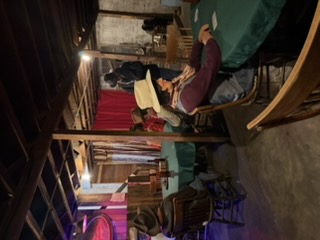
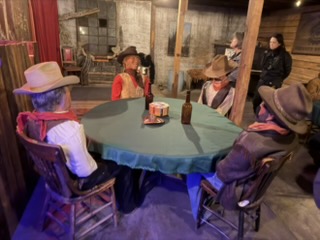
The first business we visited was this saloon. You walk down a flight of stairs to get here. One benefit of having businesses underground was that drunken men would not be walking around town with pockets full of money.
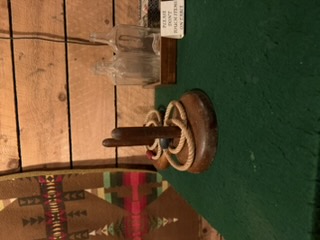
During prohibition, they would hire kids to play jacks on the street above. If policemen were spotted coming their way, one of them would pull on a string which would make a noise and let the imbibers know to get out of there.
They hung little bags of mothballs around the bar area. The aroma would kill the smell of liquor in the room and on their breath. 🤢
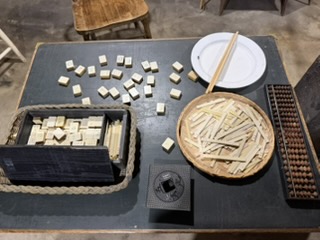
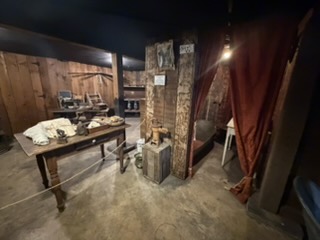
There was a set of Mah Jong on a table. Chinese immigrants ran a laundry and bathhouse under here and men would take as long in the bath as it would take to clean and dry their clothes.
The story goes that the first bath water was hot and clean. It cost 10 cents. The water was not changed and the next customer paid 5 cents. The next 4, then 3 and so on until the water had to be changed…
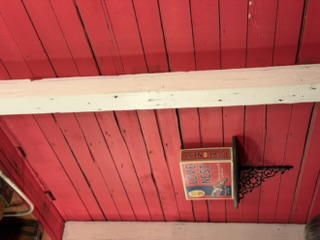
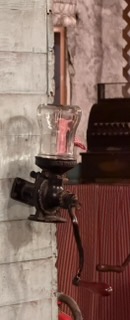
There was an ice cream parlor with a box of chocolates on display and an old nut grinder. Kids were manually churning the ice cream in the freezer or churning butter. They got an ice cream cone as payment for their labors.
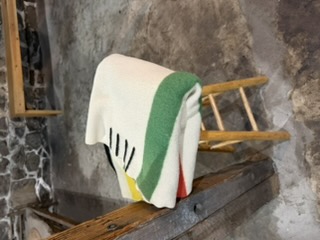
This distinctive blanket, Pendleton Glacier National Park design, has four black stripes on it. This represented the size of the blanket. Pendleton Woolen Mills adopted this sizing feature from Hudson’s Bay. HB was not too happy about it so they sued and won. Pendleton no longer has lines on their blanket to indicate size.
Meat Market & Gaming Rooms
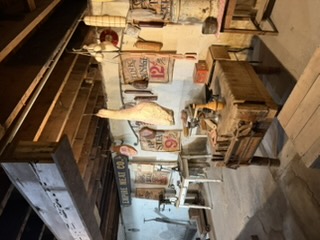
In 1899 this area was a meat market run by the Schwartz brothers. When they first named it, the German translation was not flattering as they were not first generation and did not understand the words together meant something like “terrible black.”
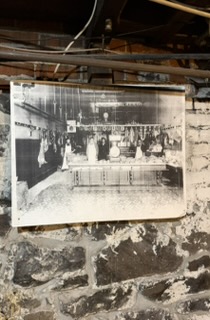
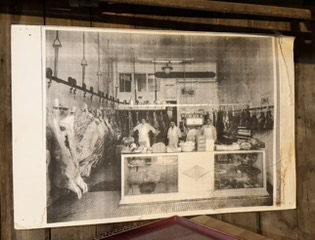
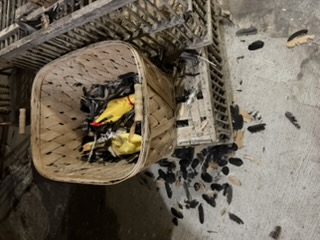
Check out the prices. These entrepreneurs also plucked, butchered and sold chickens. The feathers were then sold to a pillow and mattress company.
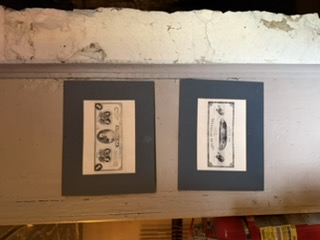
Near the end of the tour, we entered a bar/gaming area where soldiers could come to spend their scrip, a certificate of money issued to soldiers and attached to a bank where the holders could cash it in.
On the wall were two stories about some unique platoons. The first one is about smokejumpers. During World War II, the Japanese would send balloon bombs.
These Fu-Go balloon bombs were transported by jet stream 5,000 miles across the Pacific Ocean. The balloon portion was hydrogen-filled and made of laminated tissue paper. They were launched toward the United States and fuses would ignite at pre-set altitudes, releasing sandbags to keep the balloon in the jet stream. Once all sandbags were depleted, calculated to be over U.S. soil, the balloon would drop its bombs and destroy itself.
The only lethal attack by an enemy on the continental United States during World War II occurred in Bly, Oregon. A pastor saw the balloon too late to stop its trajectory and it killed his wife and children while they were out on a picnic.
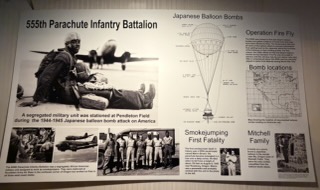
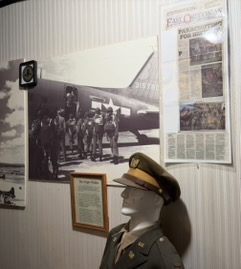
The Triple Nickels, or 555th Parachute Infantry Battalion, was an all-black airborne unit of the United States Army during World War II. Their secret mission was to intercept the Fu-Go balloons before they detonated on earth.
These balloon bombs mainly landed in forests in California, Oregon and Idaho. They did start some forest fires so the parachute company fought these too. The name “Triple Nickels” came from their battalion numbers.
Stella Darby’s Boarding House
We walked around the block to the entrance of one of the brothels. Stella Darby ran this one. It had 32 steps on the stairway. When you reached the third from the top, a buzzer would sound. Stella or her bouncer would greet the person.
She would entertain them in the parlor and would question them as to whether they wanted to rent a room or spend time with one of her ladies. If they opted to spend time with a lady, she would have them pay for a token. Each token was good for 15 minutes of entertainment.
Stella would set a timer and, after fifteen minutes had gone by, she would knock on the door and ask the man to leave or pay for another token.
By entertaining boarders in the same building, Stella could call her place a “Boarding House.”
History says that she looked after her girls, advising them to save their money and move into another line of work as soon as they could.
After a new Presbyterian pastor came to town, he and others sat outside the entrance to the house and took down names of patrons. The entertainment business came to a halt when he gave the sheriff an ultimatum: put her out of business or the pastor would name names in Sunday’s service. Her house was closed down.
At the time, girls moved from town to town on a circuit and this closure just meant they moved on to another place. Walla Walla and Pasco, WA were on this route. Stella moved all of her furniture out and started another business.
She was civic minded as well and the sheriff occasionally had to “raid” her place. She would let the policemen barge in and she would ask them upstairs and have tea or a drink with them for a while, pay them $5.00 and they would go away saying they had “raided” the place.
The center picture has some suggestive sand sculpture… Stella’s closet has a large book, look closely, it’s a dictionary.
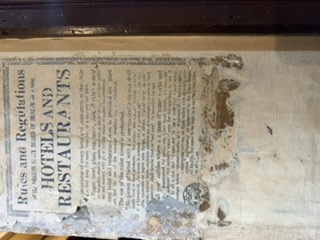
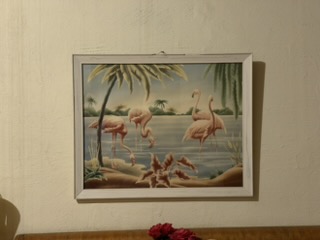
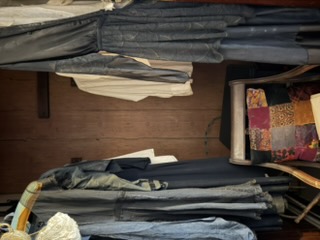
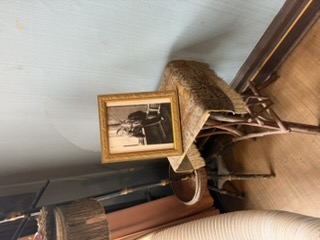
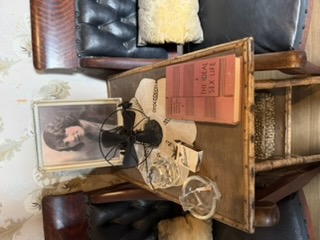
On the left is a photo of Stella. To the right, the table has some interesting reading for clients waiting for an opening.
Lunch in Pendleton
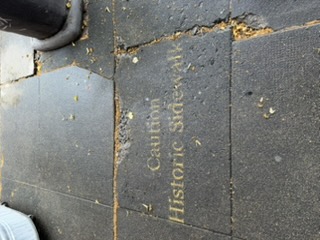
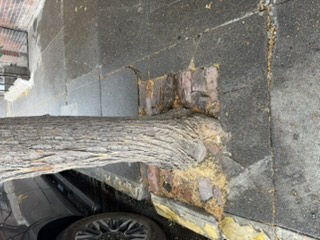
Walking to our lunch place, I saw this caution; they have a dilemma, fix the streets and sidewalks or let them reflect their history.
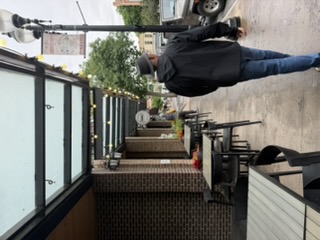
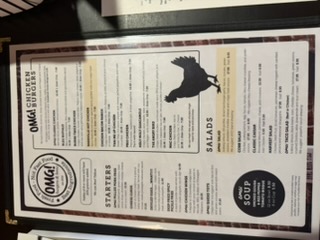
Huckleberry beer was on the menu for lunch. The soup, bison burger, and Thai chicken slider were winners.
We found this delightful scene along the road on the offramp from the highway.
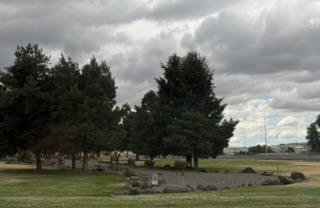
“There’s no shortcut between hard work and success, just grit and dust.”
We have found this to be true about so many of the people who came west and started farming, a business, trading company, mission, church, you name it…