Baker City Museums
📍 Baker City, OR
Two great museums today. The first was:
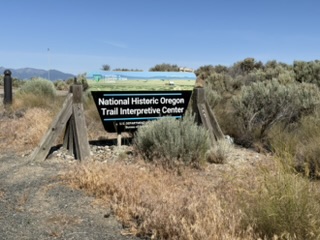
This was a great place — you can walk one way and go from Independence to Oregon City. The other way you go from Oregon City and backtrack to Independence.
The taxidermy is so amazing. When you start out, the left side of the display is reflected behind the right side display — there is a mirrored window behind the right side. Check out these animals… You can see the right picture and background reflected in the left picture.
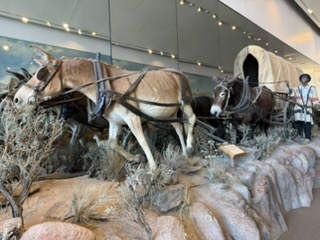
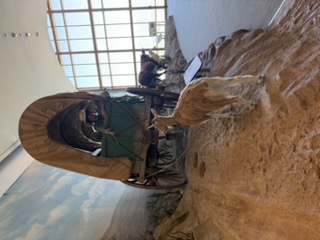
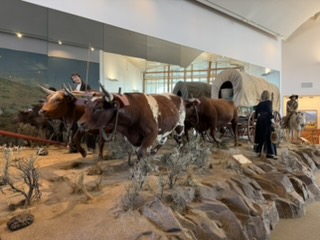
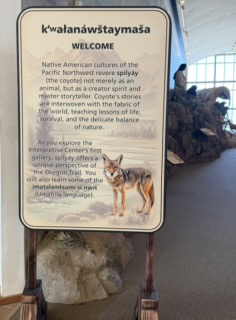
When you enter, there is an Indian welcome. The coyote was the storyteller.
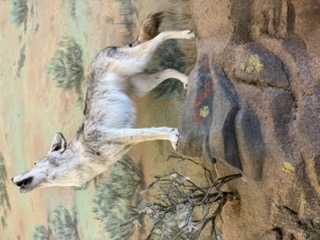
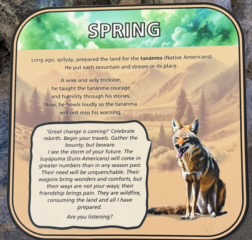
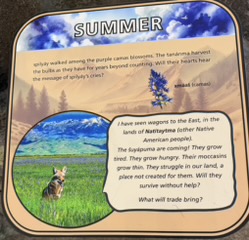
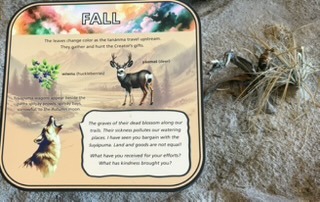
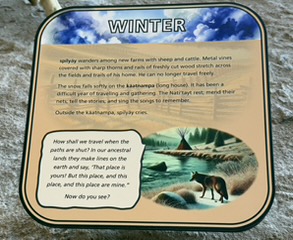
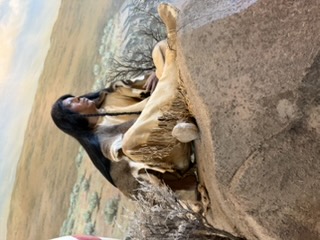
The exhibits are so realistic.
A Trail Timeline
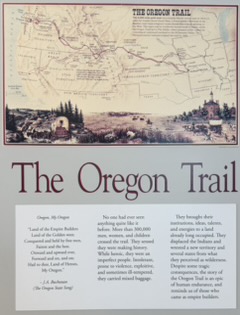
All along we have been visiting places and throwing out years. Here is a timeline that I saw at the Interpretive Center.
To see the timeline helped me figure out what was going on before and during the times of the great migration to Oregon.
| 1492 | Columbus discovers the Bahamas, Cuba, and Haiti, and wrecks his flagship, the Santa Maria. |
|---|---|
| 1579 | Francis Drake proclaims sovereignty of England over New Albion in California. |
| 1607 | Founding of Jamestown, VA, first English settlement on American mainland. |
| 1610 | Henry Hudson sails through Hudson’s Strait and discovers Hudson’s Bay. |
| 1728 | Bering discovers the strait given his name. |
| 1741-1743 | Russians reach Alaska, and the first fur traders arrive. |
| 1774 | Juan Perez leads first Spanish exploration of the Northwest Coast. |
| 1775-1783 | American Revolution. |
| 1778 | Captain James Cook skirts the Northwest Coast on his last voyage. |
| 1787 | Northwest Ordinance regulates government of western territories. |
| 1792 | Captain Robert Gray discovers and names the Columbia River, establishing an American claim. |
| 1793 | Eli Whitney invents the cotton gin. |
| 1803 | U.S. doubles in territory with the Louisiana Purchase. |
| 1804-1806 | Lewis and Clark’s expedition. |
| 1807 | Robert Fulton’s paddle steamer Clermont navigates the Hudson River. |
| 1808 | U.S. bans importation of slaves from Africa. |
| 1811 | Pacific Fur Company establishes Fort Astoria. |
| 1812-1815 | War with Great Britain. |
| 1812 | Astorians discover South Pass across the Rockies. |
| 1818 | U.S. and Great Britain agree to share the Oregon Country by signing a joint occupancy treaty. |
| 1819 | Southern boundary of the Oregon Country fixed by U.S. treaty with Spain. |
| 1820 | The “Missouri Compromise.” Maine enters the Union as a free state, Missouri as a slave state in 1821. |
| 1825 | Fort Vancouver dedicated by the Hudson’s Bay Company. |
| 1829 | Hall J. Kelley establishes a society “for the encouragement of the settlement of Oregon by America.” |
| 1830 | First wagon caravan of Smith-Jackson. |
| 1830 | Sublette travels the Oregon Trail route to rendezvous. |
| 1831 | Charles Darwin sails as a naturalist aboard the H.M.S. Beagle. |
| 1832-1834 | Nathaniel Wyeth travels to Columbia River and eventually establishes Fort Hall. |
| 1834 | Inventor Cyrus Hall McCormick patents his reaping machine. |
| 1834 | Methodist minister Jason Lee establishes the Willamette Mission. |
| 1835 | Samuel Colt takes out a patent for his single-barreled pistol and rifle. |
| 1836 | Fall of the Alamo. |
| 1836 | Whitman Mission established at Waiilatpu. |
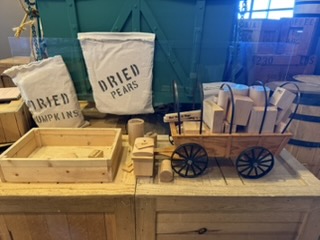
Packing the Wagon
This was a great way to figure out how much you could put in your wagon. Each piece represented food, books, a bed, spinning wheel, etc. You have to pack the wagon with what you think you will “need,” not “want.”
There was a lot of “lightning of the load” along the trail. I am guessing an enterprising person could take an empty wagon and fill it with castoff things and sell it at a supply station.
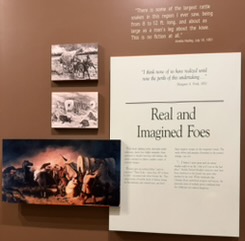
Before they left, pioneers may have read some books which depicted all Indians as savages. We are learning along this trail that many of the emigrants’ lives and belongings were saved by the Indians. They knew the land, the rivers and the dangers and helped many of these people make it safely to their destination.
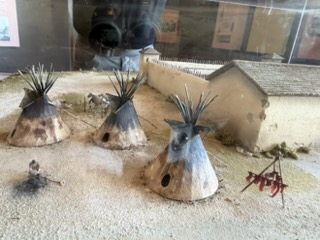
I am always fascinated by the miniatures that are in the museums and Interpretive Centers. You can see salmon drying out by that right teepee.
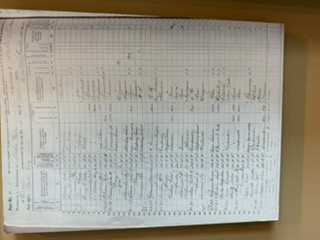
Once the settlers arrived in Oregon or the western territories, they applied for land grants. If you look at the page in the middle, you can see where emigrants came from: England, Indiana, Missouri, Pennsylvania, New Hampshire, Ireland, France, Germany.
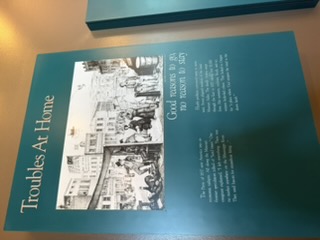
All escaping “Troubles At Home.” After the War of 1837, times were hard. People died of cholera in an epidemic in 1850. Tornados, floods, hot summers all caused people to believe that Oregon would be “a place where God tempers the wind to the shorn lamb.”
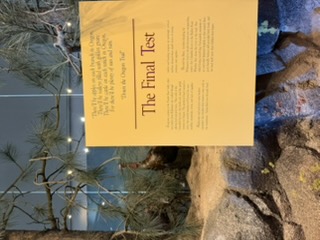
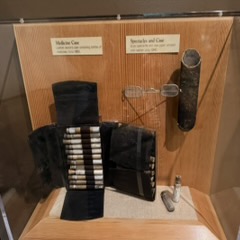
Check out the medicine containers and spectacles.
Walking the Ruts
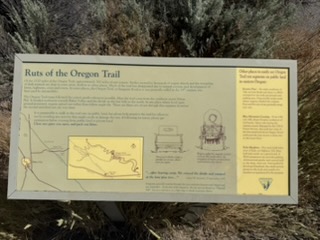
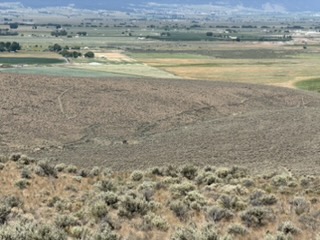
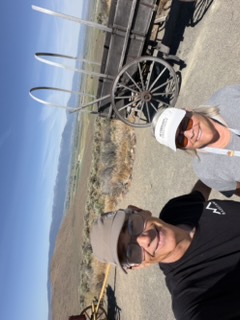
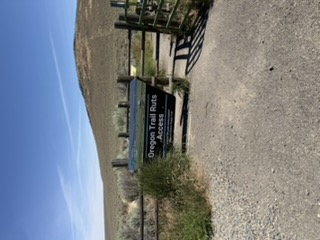
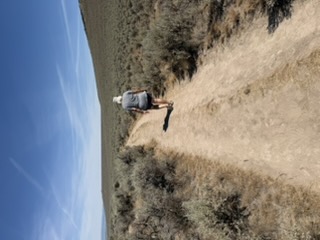
A little way down the road — more ruts! These we could walk on. I do have to say that I felt a connection walking along as the women did. I am certainly not as tough as they were! Sun, dust, rain and pushing the wagons.
At the end of the day there was more for them to do — cook, mend, wash, make more hardtack.
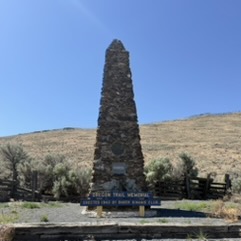
In 1943 this obelisk was erected to commemorate 100 years of the Oregon Trail.
The Nat Museum
We left to see “the Nat Museum.” Its name comes from the history of the building, a natatorium. Ever heard that word before? Me neither but I learned! It’s a swimming pool, especially an indoor one.
Here we learned about the over 500 movies filmed in Oregon. The most famous to me was Paint Your Wagon. Mom took us to Los Angeles to see it in Cinerama. We plan to see it in two parts as it’s 3 hours long. 😳
Sites for other films such as Goonies, Twilight, and Stand by Me can be found at historicoregonfilmtrail.com.
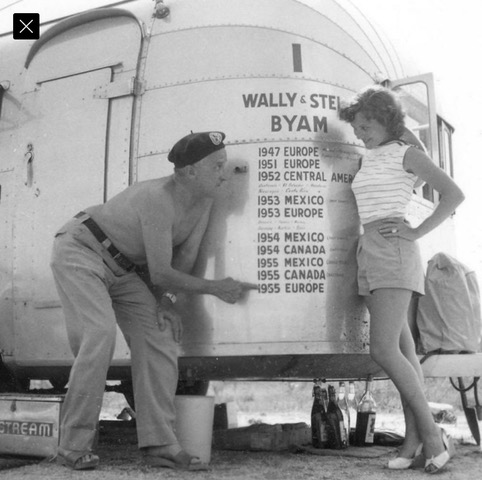
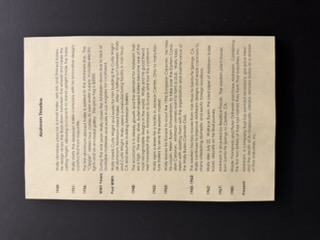
There is a room in this museum dedicated to Wally Byam — creator of the Airstream trailer. He was born in Baker City, OR. Of course we wanted to see this one.
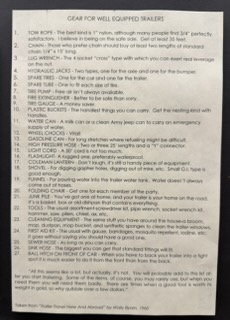
He and his wife, Stella, traveled all over the world. Check out the “Gear for Well Equipped Trailers.”
This museum had an eclectic collection. If you like geology, there was a whole room full of gems and geodes. Here was something I hadn’t seen before.
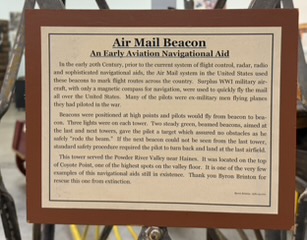
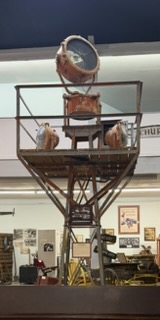
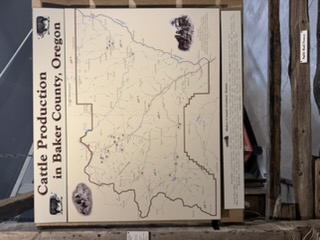
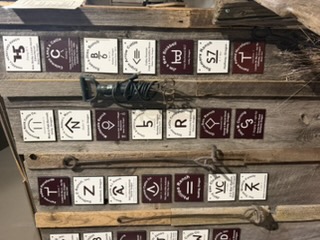
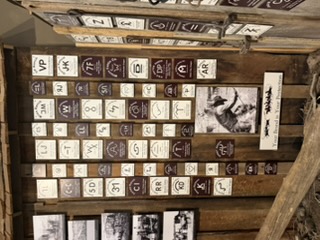
There were displays about the cattle industry. Different brands displayed on the wall were names and their brands of donors.
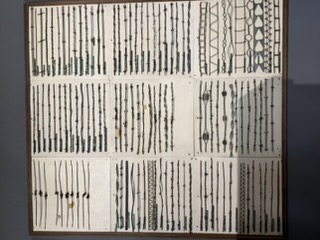
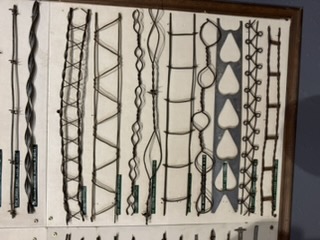
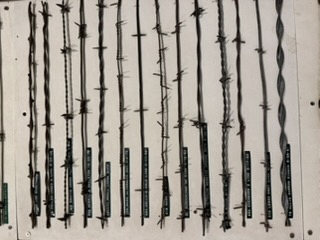
A collection of different styles of barbed wire and fencing.
Some of the names: Mack Alternative, Sunderland No Kink, Reynolds Necktie, Round Rod Buckthorn.
I took a lot of pictures of the Chinese influence and contribution to the area but that’s a whole email by itself!
“A people without the knowledge of their past history, origin and culture is like a tree without roots.”
— Marcus Garvey