Fort Bridger
📍 Fort Bridger, WY
Arrived at our last stop in Wyoming. Much like the pioneers, we stocked up — groceries, Ace Hardware, a mercantile, a bar…
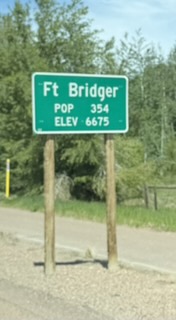
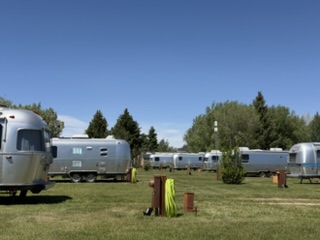
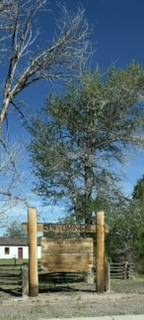
Entrance to our RV park. Full hookups. We always like these… I think we more than doubled the number of rigs parked here. It was situated next door to the Fort. Literally.
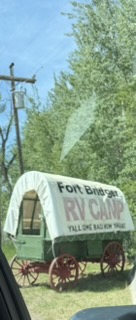
Fort Bridger
In the morning our leaders purchased tickets at a group rate. All we had to do was wear our Airstream badges.
Mountain Men, Indian traders, Oregon and California emigrants, Mormon pioneers and militiamen, the 49ers, Pony Express riders, stagecoach drivers, U.S. soldiers, and railroad men all figured in its past.
Some of the more interesting things — to me 😬 — were:
General Store
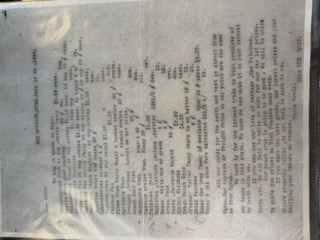
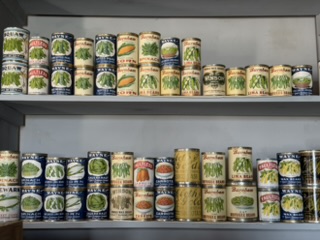
In the general store, I found a list of prices for things settlers may have wanted to buy or replenish. And more of the Burnham canned goods.
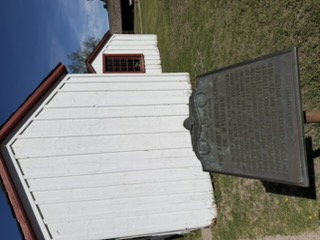
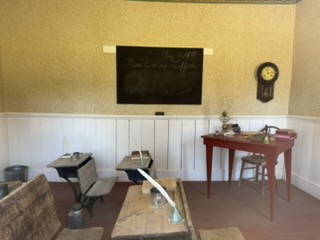
Wyoming’s First Schoolhouse
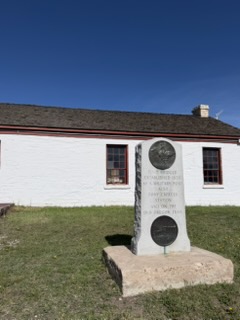
In 1860, Judge Wm. A. Carter built the first schoolhouse in Wyoming to educate his four daughters, two sons, and children of the fort. He imported instructors from the east. It was small but served its purpose.
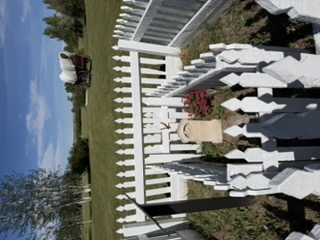
Thornburgh
Thornburgh the dog is buried here. As a puppy, he was found by soldiers. They named him after their commanding officer, Major T. T. Thornburgh. He was found after a fight with the Utes and his family’s wagon was burned. He followed the soldiers until he reached Fort Bridger.
During his time here, he caught a commissary thief, warned the troops of incoming Indians, saved the life of a soldier in a knife fight, and rescued a small boy from drowning.
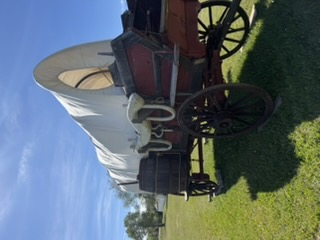
Wagon Details
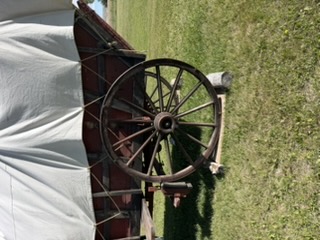
I know, I know, we have seen so many pictures of wagons… I took these because I have been reading the descriptions of the braking system, how they carried water and an extra yoke for their oxen, and how they would hang tools on the outside of the wagon for quick access. All of that was on this reconstructed version.
Gone But Not Forgotten
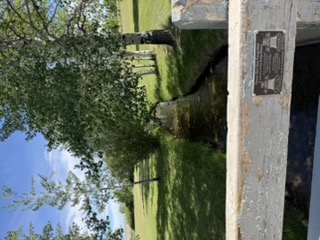
On the marker:
GONE BUT NOT FORGOTTEN
In Memory of the Bridge Setters
Snowy Owl — Wayne Mendenhall
War Eagle — Larry Williams
Wolf Man — Jim Dayle
Ram Rod — Victor Moonlager (?sp)
Enlisted Men’s Quarters
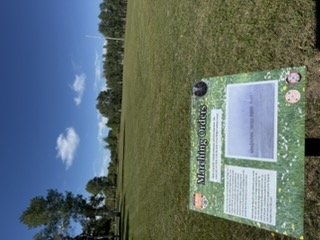
On the far side of these grounds were the enlisted men’s quarters. On this broad area, they would play the bugle, raise the flag, perform drills, and hold inspections. It says here that soldiers would come out and collect the dandelions to make dandelion wine.
The Punishment Horse
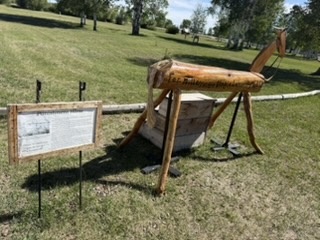
Here’s a good story. This is the punishment horse.
In 1866, Captain Anson Mills had a discipline problem. Men were committing petty crimes so they would be thrown into the guardhouse for twenty-four hours. This way they got rest and didn’t have to complete their chores. Captain Mills came up with another form of punishment.
If someone committed a petty crime, they were required to sit on the punishment horse and hold a large wooden sword. They sat in full view of all of the occupants of the fort. Occasionally, they were required to “feed,” “water,” and “curry” the horse. Sitting on the horse became uncomfortable and this punishment was embarrassing.
Jail & Commissary
The building on the right was a replacement for a wooden structure to house prisoners. When they first arrived to this area, the militia had prisoners with them. A place to house them was quickly built.
Prisoners could easily escape the old jail, go next door to the commissary, buy tools or other aids to help more prisoners break out.
The commissary was built using a wooden wall from a previous structure. When it was finished, it was a long building which later became a shooting range for practice during the Wyoming winter.
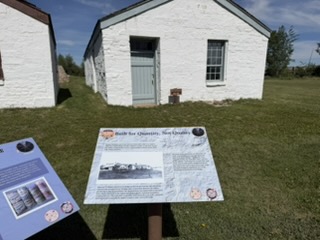
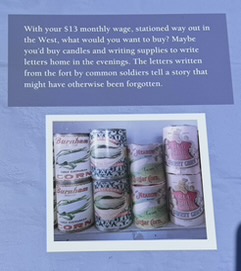
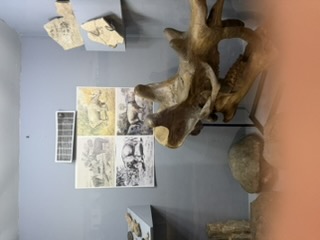
Wyoming has many fossil beds and below are some unique findings. Currently there are Western Wyoming College students working on a project to uncover physical remains of 19th-century life at Fort Bridger.
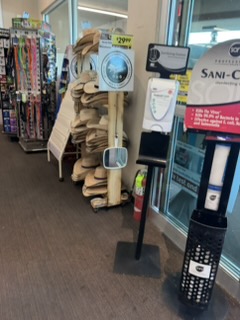
Things I don’t see at my grocery store… hats — note the hand mirror to see how you look in it.
“Out here everything takes longer. The miles in between teach you patience. They teach you what’s worth driving for. In Wyoming, miles are how we measure love. The distance you’ll go to help a neighbor, to pick up your kid from an activity or to visit someone you care about.”
— Hilltop Bank TV Commercial