Sinks Canyon, Lander & South Pass
📍 Lander & South Pass City, WY
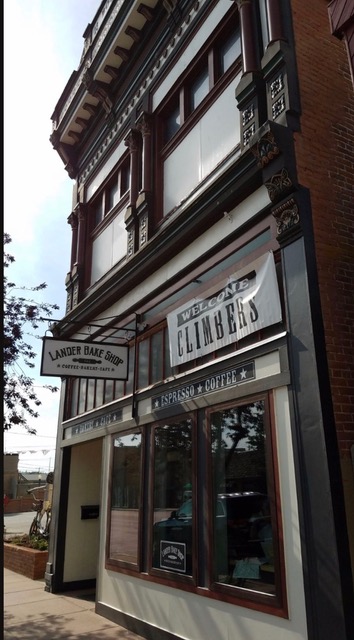
Start the morning with a latte and breakfast burrito and you will have a good day!
Sinks Canyon
Off we went to view Sinks Canyon’s underground river. About 20 minutes from where we are camping — an easy choice.
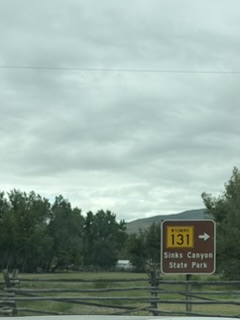
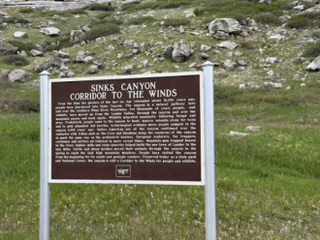
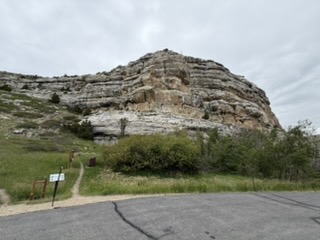
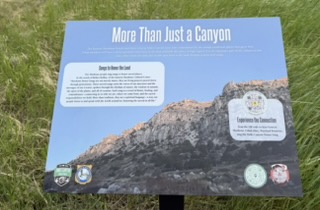
This area is called the Sinks, as the water goes underground and then returns — under the highway and to the other side. We saw the quiet water first. There was a sign not to fish on this side of the highway. The Popo Agie River disappeared in the canyon and was a mystery for thousands of years.
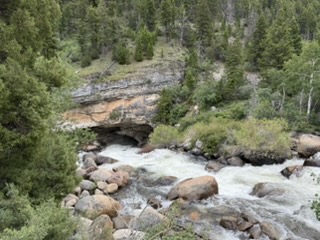
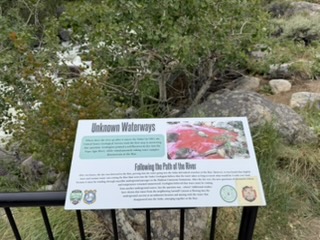
In 1983, United States Geological Service geologists poured a red fluorescent dye into the river. Stationed downriver, more geologists waited and took samples periodically to see when the dyed water would come out on the other side. What they found was the water was a few degrees warmer — they postulated that the time spent underground and making many turns we don’t see warmed the water a few degrees.
It is now a haven for trout. No one can fish on this side of the highway.
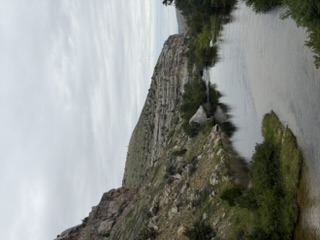
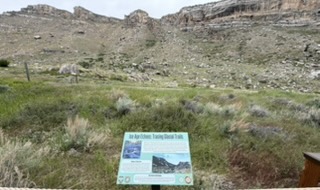
We saw two distinct types of terrain on each side of the highway and a couple of climbers getting their gear on to ascend one of the steep canyon sides.
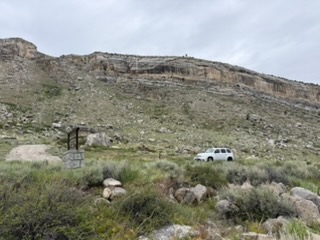
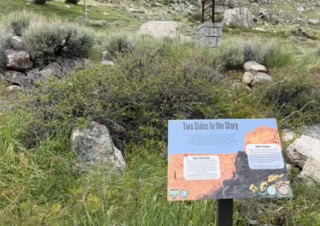
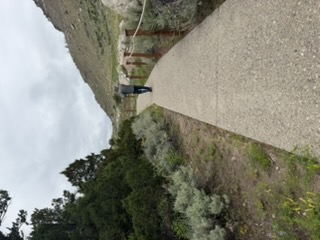
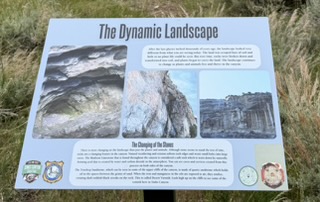
Wandering over to the other side of the highway, there was a well-marked trail with lots of information about the area. It reminded me a lot of Colorado’s wild places.
Visitor Center
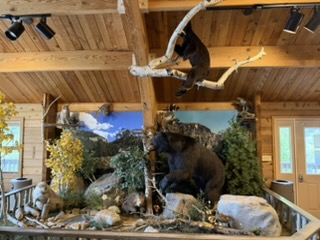
In the visitor center, we saw some taxidermy experts’ work. The ram was named Ram Ram and he used to butt his head onto cars. The thought was that he saw his reflection and wanted to fight the other male. See how many animals you can find in the pictures.
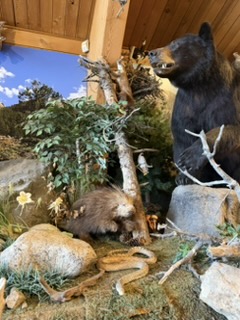
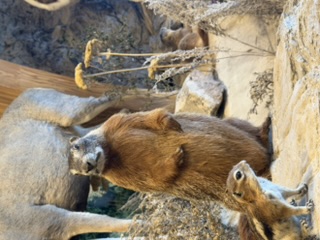
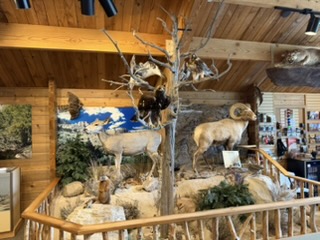
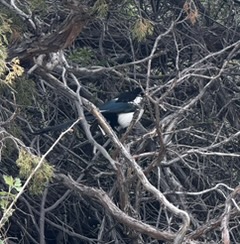
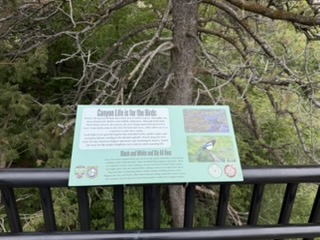
I saw the bird on the left and then the sign on the right — it’s a magpie!
Pioneer Museum
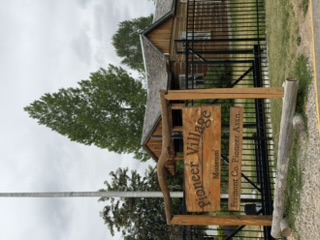
Second stop — the Pioneer Museum. A pleasant change from all things Oregon Trail; this museum concentrated on the type of people who settled in Lander, WY.
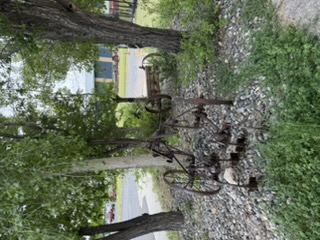
All of the collections were donated. Think what may be in grandma’s attic. Some of the photos had no names on them, old copper spittoons (how did she end up with them?), clothing and papers you don’t know what they are or where to put them.
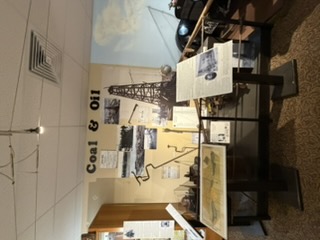
On the left is a display of coal and oil equipment and maps used to identify where to drill. We still see coal mined — some of my train pictures had many cars loaded with coal.
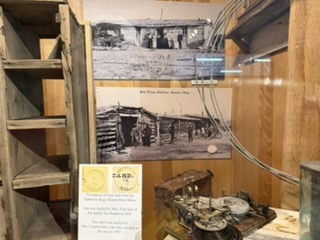
Taconite — mined in Wyoming. It’s an iron-bearing sedimentary rock, mined in the 1950s. There is a history of mining for gold, uranium, coal, and iron ore in the area.
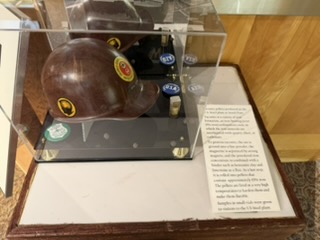
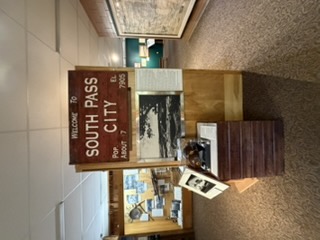
We visited a mine later in the day in South Pass. The sign above indicates there were not many inhabitants in South Pass City until the mine came.
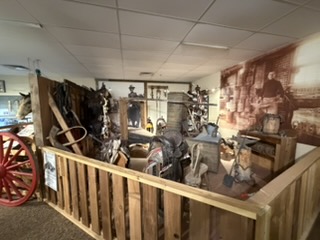
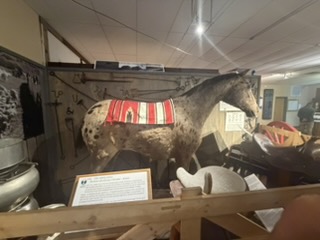
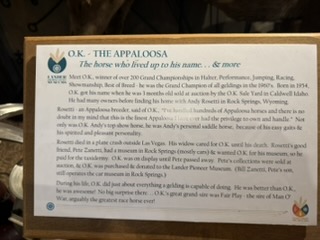
There was also a large display of blacksmith tools, saddles, and a famous (in this area) horse, OK, whose sire was Man o’ War. Crystal — that will sound familiar to you!
I have wondered what the difference was between a regular saddle and a sidesaddle. Now I know!
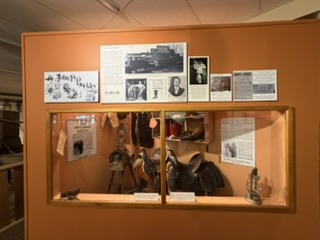
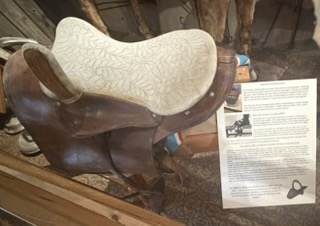
OK the Appaloosa and his story.
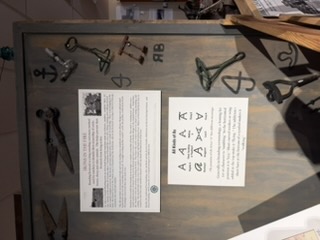
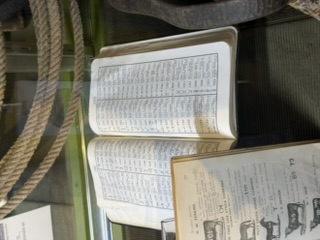
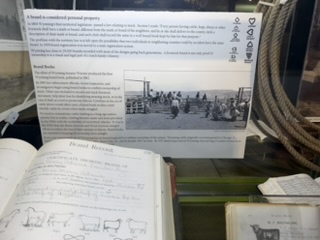
Another fun display was about branding and how they registered their brands. If you can blow up these pictures, you can see the different brands. As we drive along, we see some on entry gates to ranches.
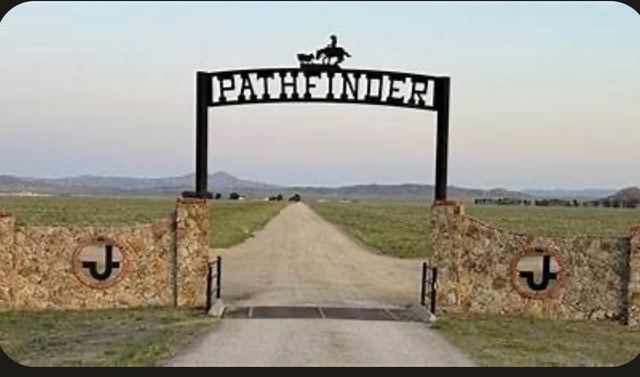
We drove along the highway and saw many identifiers for Pathfinder Ranch. I looked it up and it is 916,076 acres and it recently sold for $79,500,000. It is larger than the state of Rhode Island. Segments of the Oregon, California, Mormon, and Pony Express Trails weave through the property. On either side of this entrance, you can see what the brand is for this ranch.
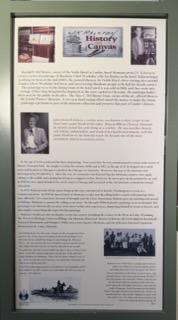
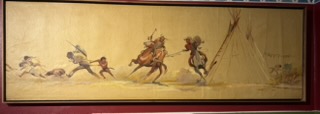
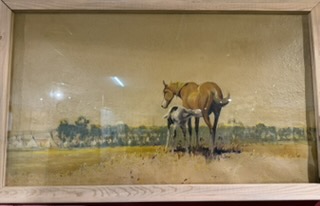
Upstairs I found the works of J. K. Ralston. He was commissioned to paint several paintings for a local hotel. When the hotel was sold, his paintings were taken down and landed in the attic of a local. When she found them, she donated them to the museum. Private donors are chipping in to have them cleaned up after the years they absorbed cigar and cigarette smoke.
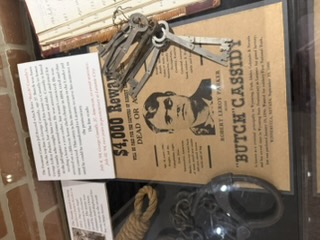
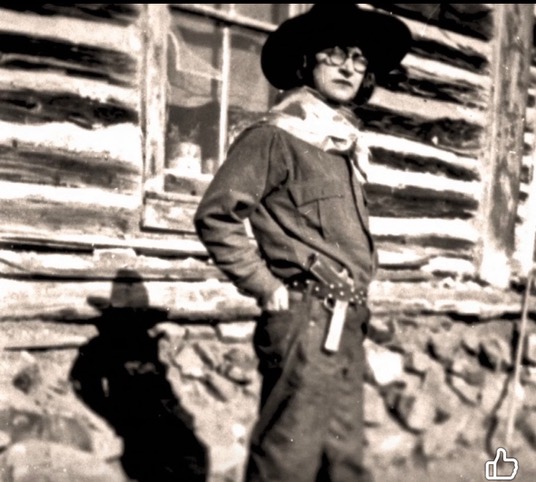
This famous (infamous?) character was arrested and jailed in Lander.
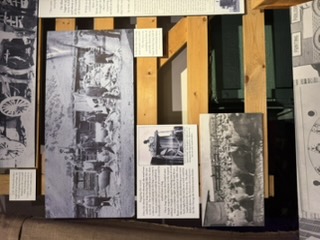
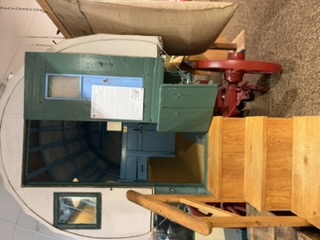
Bear with me — I have one more collection I found interesting: sheepherding.
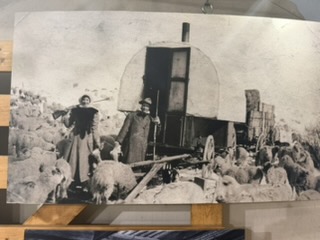
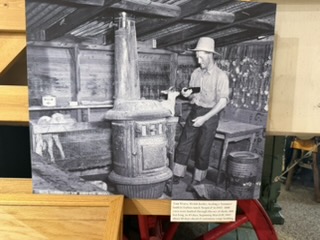
A sheep shearer/herder’s wagon.
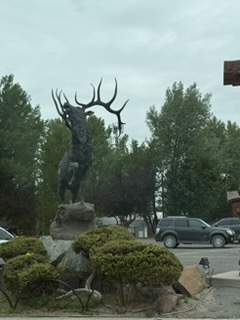
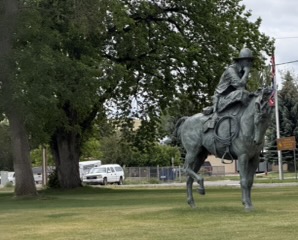
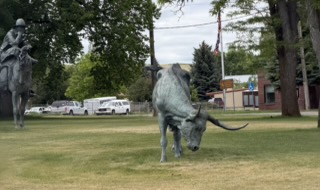
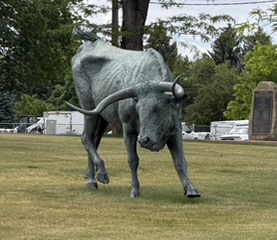
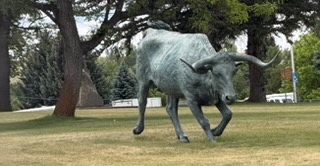
Bronze Figures of Lander
Driving on Main St. in Lander, I saw more bronze figures I have come to think of as standard decor for Wyoming towns.
South Pass City & the Carissa Mine
In the afternoon we and three other couples from the club drove to South Pass to tour an abandoned mine. Before the tour, we wandered the streets of a “town” they had recreated. Cabins, stores, a schoolhouse, a couple of bars, a brothel, church, and barbershop/bar were stocked with items of the period. The docent at the general store told us that they researched the things they had found from the era, recreated the labels on cereal, canned goods, crackers, ammunition, etc. Items that struck me were the threads for sewing, fly fishing gear 😳, and the label that says “Burnham brand Early Evergreen Corn.”
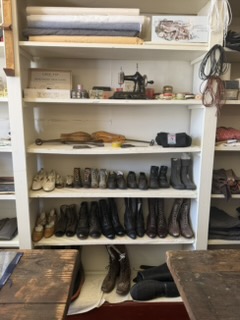
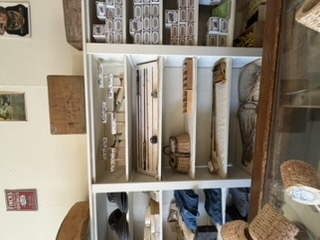
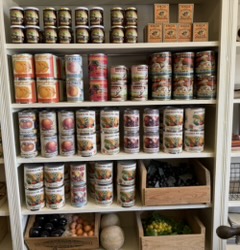
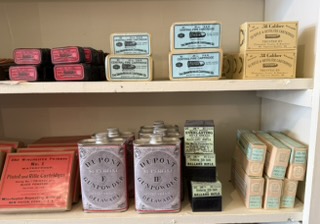
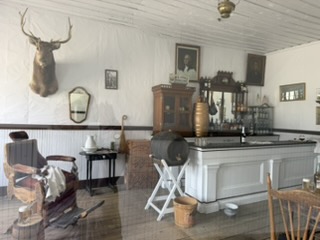
I also liked the bar/barbershop I saw. How convenient — hope they didn’t serve the barber….
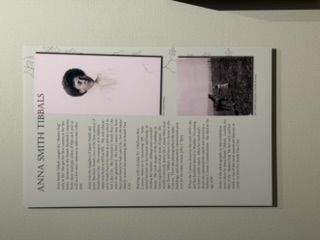
There was a collection of paperwork from the Carissa Mine itemizing how much labor and materials cost. The manager of the mine, Barney M. Timbals, was very thorough. His wife was known for her art with photography.
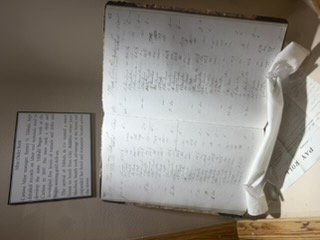
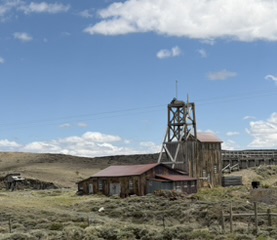
We signed up for a tour of the Carissa Mine and heard stories about the levels in the mine, how miners had to go down ladders the equivalent of a 40-story building. They carried three candles. When the first one went out, they would come up for lunch. When the second one was out, it was time for a break. When the third one sputtered, it was time to go home.
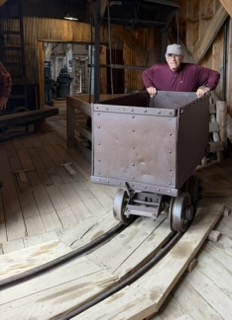
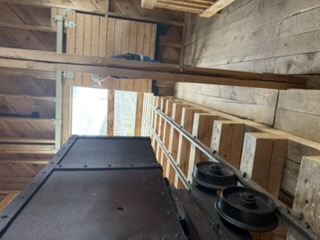
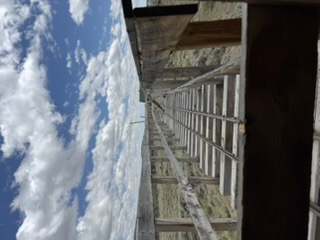
The only things going up and down using machinery were the cars holding ore. When they arrived at the top, if there was a thought that they would have gold in them, they were pushed by a 14-year-old over to the building where the ore and gold were separated. Keith gave it a try — mind you, this was an empty car! Full ones were pushed along tracks. The boy pushing had to be careful to stay on each crosspiece in order to keep upright.
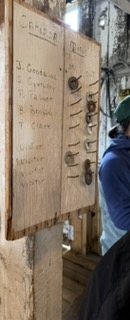
Another fun story. One day the precursor to OSHA came by and asked whether they checked in and out of the mine (to make sure everyone came out at the end of the day!). They had no such method, so someone got the top off a crate, hammered some nails into it, and used washers to create this board.
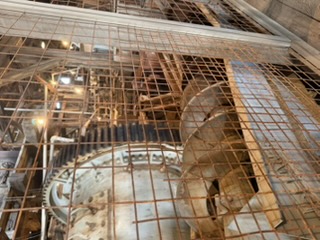
Once the ore reached the building, there were many steps to reduce the large pieces to small ones, even smaller ones, and finally to black sand.
Gold mining was a risky business, and to save money and restart this mine, they purchased “used” machinery from a nearby defunct mine. It came along on the railroad to as close as they could get and then it was transported by wagons to be reassembled. The person who was responsible for making this happen was a woman, Zoie Green Fuller. When she took the equipment from the old place, she numbered each piece so as to recreate the functions of each once they got to the new mine. Our guide likened it to an old-fashioned Ikea….
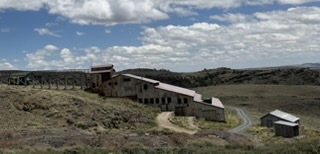
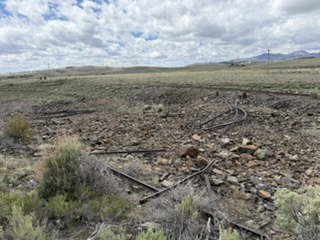
Each cart of ore was tumbled into a bin. This bin held balls of iron which tumbled around with the ore, breaking it up from grapefruit-sized pieces to golf ball-sized pieces. It was then tumbled into sand. When they mixed that with water, some of the gold ore would be separated. This process then moved to a step where the sand was shaken on a table with dividers and more of the gold was extracted. I’m not getting all of the steps in here, but one of the last steps was to stir the black sand with remaining remnants of gold in a large bin with cyanide! There was no measuring — someone had to just know how much to add in. Then there was a process to separate the cyanide from that ore.
Cowfish & Scream
Back to the campground and then out to dinner. We had one of the best dinners I have ever had at a place named Cowfish. Appetizers were calamari and Boursin cheese-stuffed mushrooms. Entrées were pan-fried rainbow trout, center cut filet, and elk osso buco.
After dinner we ate at Scream, an ice cream spot on the main road. Included in our kitty fee! We ran into the three cyclists who were crossing the country on their bikes (also ending their trip in Oregon) and talked them into having ice cream as well. 🍦
“The great thing about new friends is that they bring new energy and fresh perspectives into your life.”