Scotts Bluff & the Legacy of the Plains
📍 Scotts Bluff National Monument & Legacy of the Plains Museum, NE
Morning started with Ghosts in the Swamp for breakfast — so we all had the same question. It turns out it’s oatmeal with vanilla ice cream on top. 😳 I didn’t get the full experience — went with brown sugar and raisins. Good fuel for what was to come.
Scotts Bluff — The Overlook
We were off to Scotts Bluff. There was an overlook where we had the group picture taken — in what felt like 30 MPH winds. Bonnets and neckerchiefs on, tied tightly!

The Walk Down
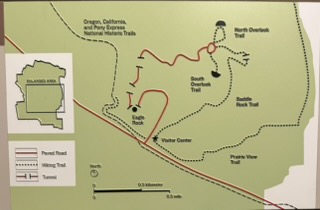
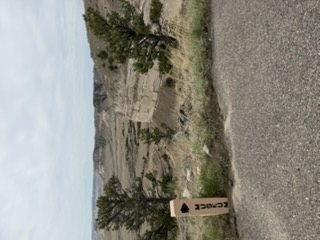
Then some of us walked down to the Visitor’s Center — 1.6 miles, all downhill.
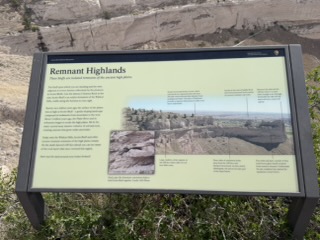
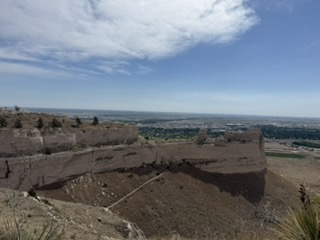
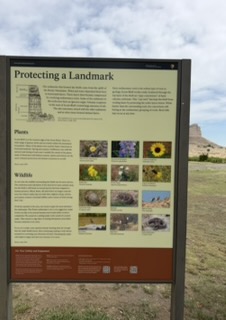
The picture on the right shows roughly the height we started from.
The National Park Service has an app with audio tours for certain parks and historical sites — Scotts Bluff is on it, so we could listen as we wandered down.
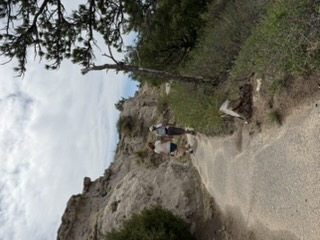
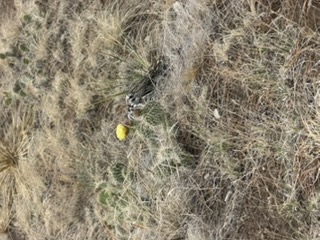
The flower on the right was identified as a prickly pear cactus.
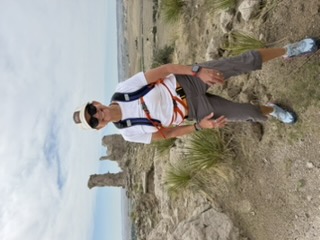
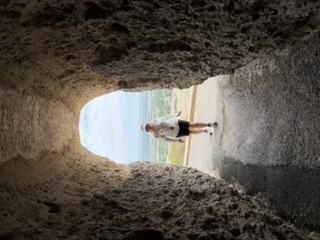
In the distance behind an Airstreamer you can see the rocks from the first picture. Another Airstreamer is in the entrance to a tunnel under the rocks. The stone here was so soft that a light touch would produce sand and dust.
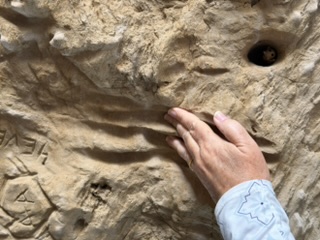
Erosion
I learned about erosion here, and it makes you think about how many of our current landmarks may eventually be gone because of all the forces below.
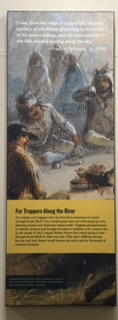
The Fur Trappers
Trying to find new information, I was drawn to the fur trappers’ stories. They were wandering through the areas pioneers would later travel — and they often led emigrant parties, since they knew the easiest wagon routes through the terrain.
Now a map showing the unique challenges and landmarks the pioneers encountered.
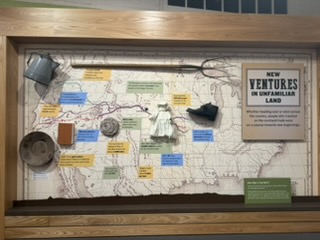
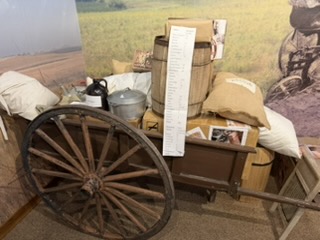
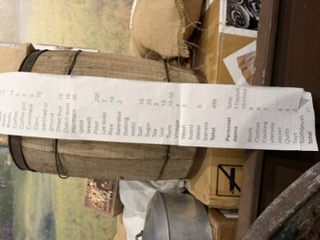
Not exactly Costco — but these are the supplies emigrants stocked up on before leaving, or added at supply stations along the way.
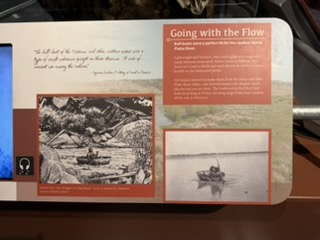
On the right is a bull boat — made of animal hide stretched over a frame. They were lightweight, could float over snags, and required no timber. The fur traders learned to make them from the Sioux and other Platte River tribes. Some were as long as 30 feet.
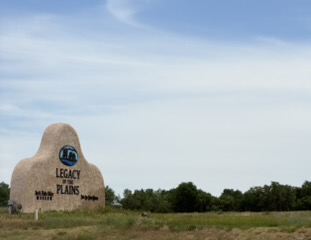
Legacy of the Plains Museum
We toured the Legacy of the Plains Museum and found some different perspectives on pioneer and Native American life.
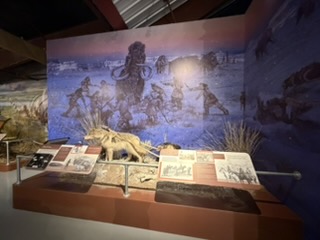
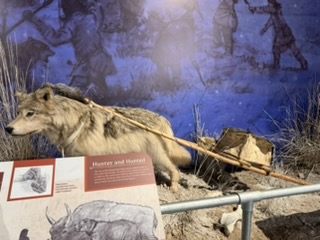
We’ve seen a lot of wagons — but the Native tribes had a different kind of transport for their belongings. They used dogs to pull a travois: a frame loaded with their personal goods, smaller and more nimble than any wagon.
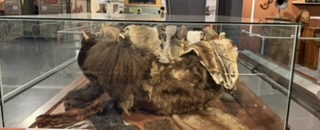
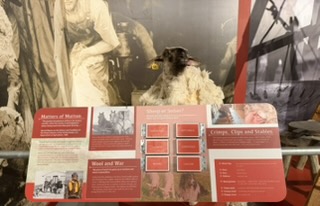
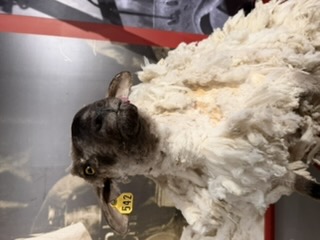
Good taxidermy — this poor guy just wants to be sheared and get back out to the pasture.
The Quizzes
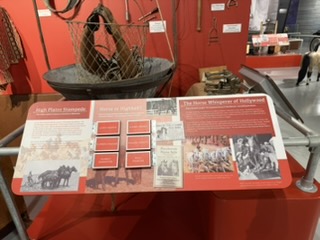
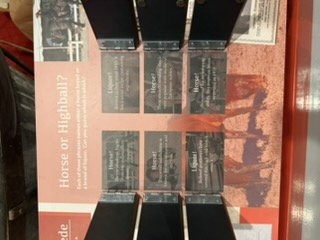
There are some fun things to figure out here. First: which is a horse and which is a highball? Don’t look at the right until you make your pick.
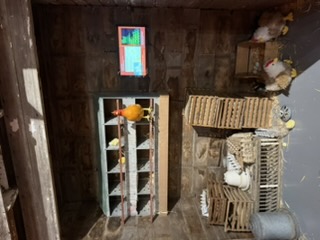
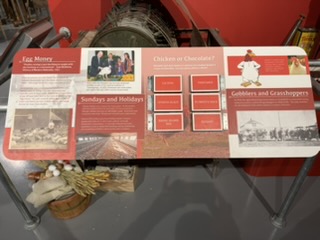
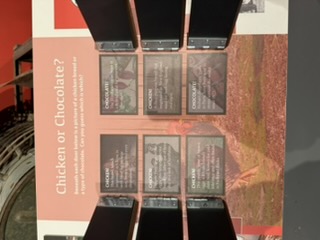
And this one is about chickens. I bet Holly knows the answers!
The Hendersons
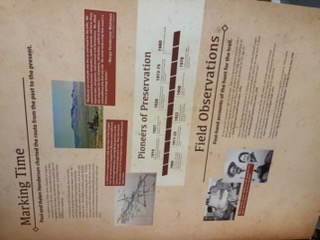
A couple of historians who recorded stories of the Oregon Trail and saved gravestones and other artifacts were the Hendersons. They charted the route from the past to the present, beginning in the 1920s — gathering stories from people who had actually traveled the trail.
The Donor Wall
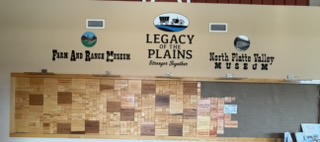
This museum has been made possible through donations. Mirroring the way homesteaders received their land plots, the smaller donors have small pieces of wood with their names on them — the larger the donation, the larger the block and the name. The docent told us that retired farmers help with the plowing, planting, and harvesting on the property: mainly sugar beets, potatoes, and beans.
“Life is meant for good friends and great adventures.”
— Anonymous
This caravan is introducing us to new friends and is definitely a great adventure.