Courthouse Rock, Chimney Rock & the Trail Ahead
📍 Bridgeport · Chimney Rock · Gering, NE
Today we were the second to last ones to leave the campground. Keith walked around checking the departed Airstreamers’ sites to make sure no one left anything behind. When you’re only staying two nights and know you’re heading out, decorations are a low priority! Some of us didn’t have water hookups at this spot, so we were eager to get to Gering, NE for full electric, water, and sewer hookups. Hooray!
Taking off around 11:30, we hit all of Keith’s choices from the National Historical Trails Auto Tour Route Interpretive Guide published by the National Trails System through the National Park Service.
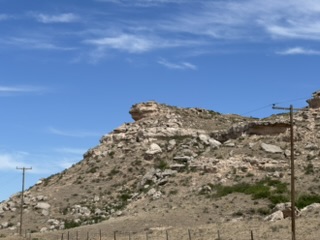
Frog’s Head Bluff
First stop was a drive-by. The settlers named it that for obvious reasons — see what you think.
Ancient Bluff Ruins & Narcissa Whitman Wayside
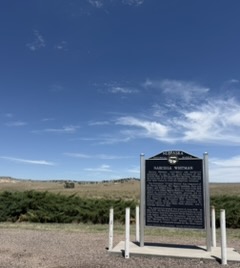
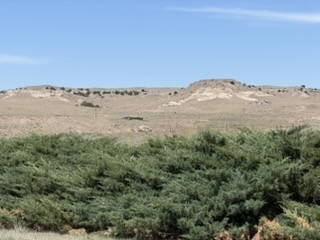
Second stop: the Ancient Bluff Ruins and the Narcissa Whitman Interpretive Wayside. Narcissa Whitman saw these bluffs and described them as white.
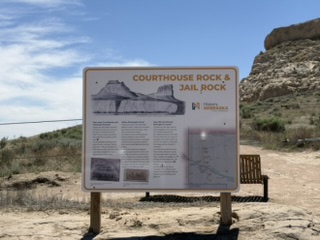
Courthouse and Jail Rocks
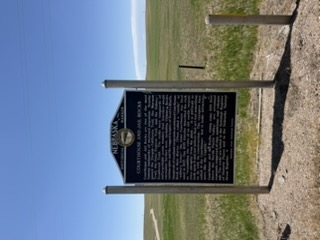
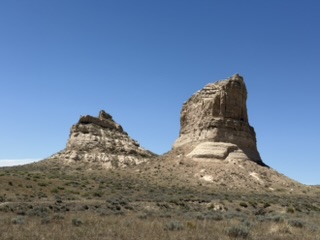
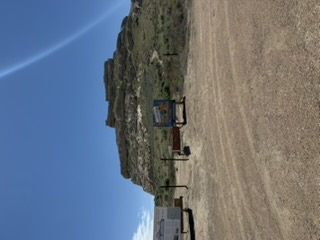
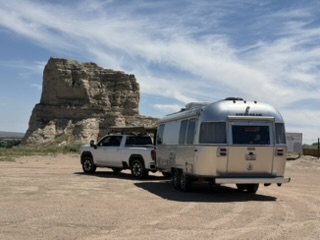
Our leaders tried to discourage us from driving up to the parking lot at Courthouse and Jail Rocks — but someone (the driver) wanted to go check it out. The passenger just worried there’d be nowhere to turn around. Luck was with us.
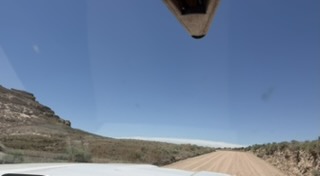
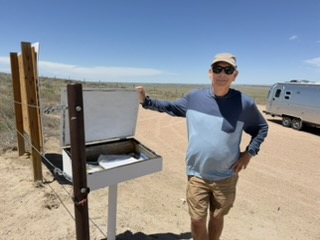
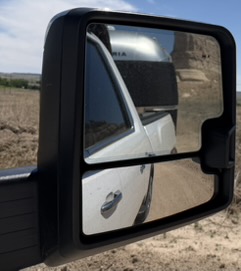
We drove to the top and got some great photos. We also noticed it was after 1 PM and we were the only ones who had signed the visitor register all day. The road was dirt but mostly smooth — one patch of mud (currently being washed off at the campground) — but plenty of clearance with our 3-inch lift. I even tried to get a picture of the rocks in the rearview mirror.
Bridgeport: Pony Express Marker & Mural
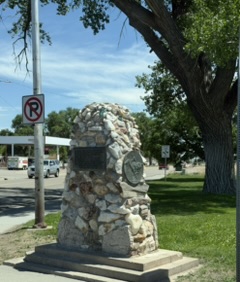
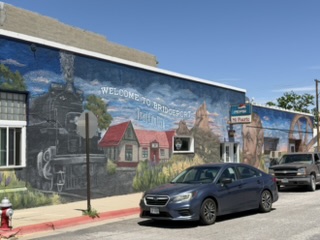
Driving out of the little town of Bridgeport after Courthouse Rock, we spotted a Pony Express marker and a beautiful mural. We’ve seen several small towns along the way that lean hard into the murals — and they’re always worth a stop.
Chimney Rock
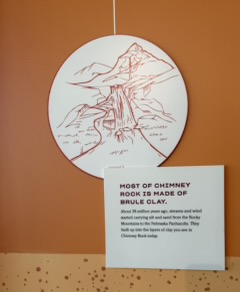
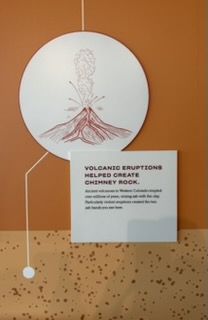
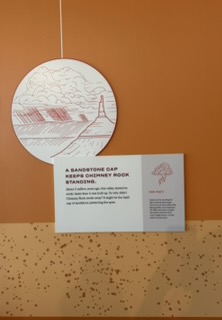
On to the big one. Chimney Rock was a defining landmark for emigrants — a measure of how far they’d come and how far they still had to go. Settlers had never seen anything like this geologic formation.
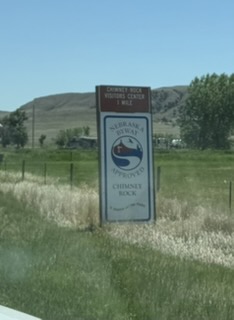
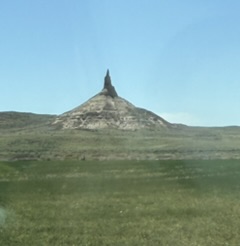
How this landmark came to be is explained in the panels below. Settlers also carved their names and dates of arrival into the soft stone at the base.
Chimney Rock Museum
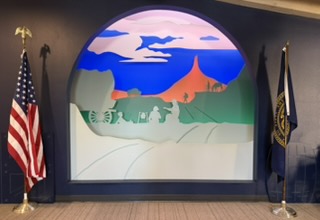
Upon entering the museum you see this mural.
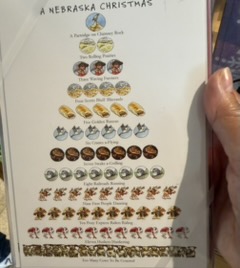
They have a good sense of humor here — I remember seeing another version of the “Twelve Days” card when I lived in Oregon.
The Diseases
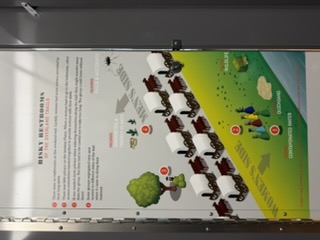
Two commonly contracted diseases along the trail were Cholera and Dysentery. See how they thought they should treat them.
Cholera:
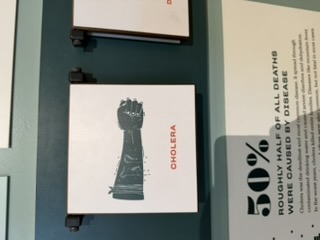
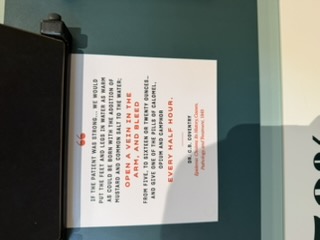
Dysentery:
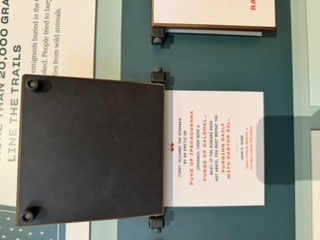
😳
Trail Food
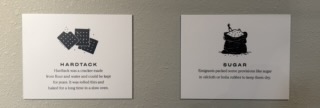
Food suggestions for the trail included hardtack — a dense cracker made from flour, water, and sometimes salt. Inexpensive to make and long-lasting if kept dry, it had to be soaked in something before eating. Settlers could make a broth from meat and bones and add vegetables when they had them. (Thanks, Kathy B, for this info.)


From Wagons to Automobiles
There was a picture show telling the story of transportation: wagon → stagecoach → train → automobile. Making way for the trains and automobiles meant men working with shovels — no huge machinery to blast through a mountain. No need for a gym. They were tough.

Ice Cream!
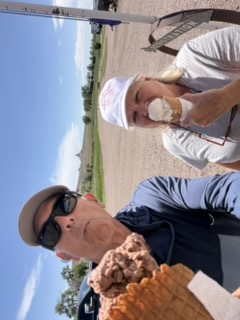
Here we are channeling our friends Scott and Elaine — they always post pictures of the ice cream treats they find. You can just make out Chimney Rock in the distance behind us.
From the Passenger Seat
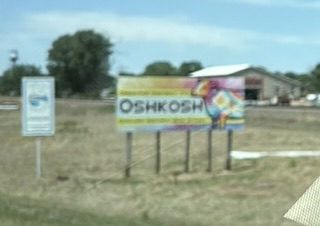
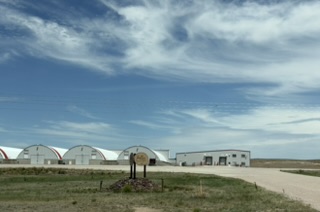
Interesting things spotted along the way. Who knew there were two Oshkoshes? And then there was this huge hay storage facility.
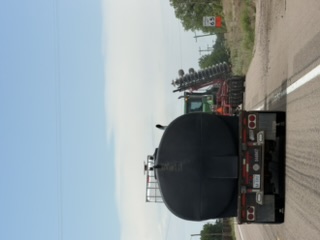
They were working on the railroad (a song for us old people). We saw three long trains full of coal — Keith says they still mine it in Wyoming. We also followed a large farm machine for a bit.
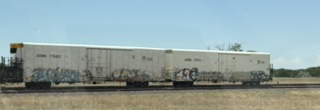
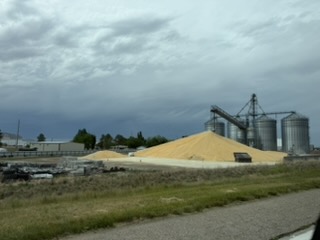
Some of the train cars had colorful graffiti. And we saw this massive pile of corn.
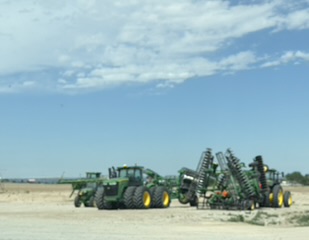
Here’s a better look at the farm implement we followed. I guessed it was a tiller — compare those many blades to the single blade the homesteaders used to break up the soil.
“No conception can be formed of the magnitude of the grand work of nature till you stand at its base and look up. If a man does not feel like an insect then I don’t know when he should.”
— Elisha Perkins, posted at the Chimney Rock Museum